

A few years ago, artificial intelligence in the payments space was mostly a back-office story. Fraud models. Risk scores. A little automation in customer service. Useful for sure, but invisible to most merchants and cardholders.
That’s no longer the case. In the past two years, AI has moved from a quiet efficiency tool to a central force reshaping how payments are processed, protected, and even initiated.
The pace of change has been hard to track, even for industry insiders. So, let’s do that here: what has actually changed, what’s arriving next, and what do merchants and payment professionals need to understand in 2026?
The Foundation: Smarter Fraud Detection
If you want to understand how AI evolved in payments, start with fraud. That’s where the technology first proved itself at scale, and where the leap in capability has been most dramatic.
Traditional fraud detection relied on rules: if a transaction exceeds a dollar threshold, or comes from an unusual place, flag it. These systems were effective against known fraud patterns, but they couldn’t keep pace with how quickly bad actors adapt. They also produced a frustrating rate of false positives — legitimate transactions declined because they looked unusual.
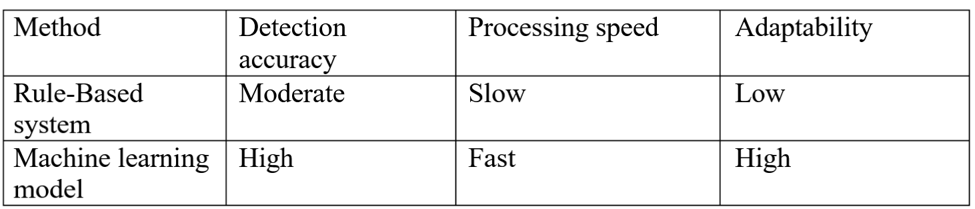
Source: Christelle El Samra, IMJ Journal
Machine learning changed the game. Modern fraud models don’t just check transactions against rules — they analyze behavior across millions of data points in real time: device fingerprints, typing cadence, purchase history, time of day, merchant category, and dozens of other signals at the same time. The result is a far more nuanced picture of whether a transaction is legitimate.
The numbers show why machine learning has become central to fraud prevention. Card-not-present fraud remains the dominant fraud challenge in digital commerce, but the industry has become better at detecting suspicious transactions in real time. Online card payment volumes continue to outpace successful online card fraud.
For merchants, this means fewer chargebacks, and for cardholders, fewer false declines. It’s a case where AI has delivered concrete, measurable value without much fanfare.
As we know, AI has moved beyond the background in 2026.
Center Stage: AI Moves to the Front of the Transaction
For a long time, AI’s role in payments was largely reactive — it evaluated transactions after they were initiated. Over the past two years, that’s changed. AI is increasingly shaping the transaction before and during the moment of purchase, and the benefits for merchants are showing up well before checkout.
Inventory management has been one of the most immediate wins. AI models now track sell-through velocity, seasonality, and supplier lead times to flag stockouts before they happen. For a retailer or restaurant operator, that means fewer “sorry, we’re out” moments and less capital tied up in excess stock. This used to require a dedicated inventory manager or a lot of spreadsheet guesswork. Now it’s increasingly built into the platforms that merchants already use.
Checkout and payment flows themselves have gotten smarter. Dynamic routing — where AI selects the optimal payment network in real time based on cost, speed, and approval probability — is now standard at major processors. Intelligent retry logic, which uses machine learning to guess the best time to re-attempt a declined transaction, has had a major impact on authorization rates for subscription businesses. These aren’t flashy features, but they add up to significant revenue impact at scale.
Customer-facing experiences have shifted too. AI-powered chatbots and virtual assistants now handle the majority of routine payment inquiries, like transaction disputes, balance questions, and payment scheduling, without human intervention. Today’s systems understand context, handle complex follow-up questions, and escalate appropriately when they can’t resolve an issue.
None of these solutions require a merchant to become an AI expert. The shift that matters is that AI has moved from analyzing what already happened to helping decide what happens next (restocking, retrying, resolving), often without a person needing to step in at all.
The Compliance Wrinkle Nobody Talks About
Here’s something that often gets overlooked in the AI-in-payments conversation: the regulatory obligations don’t disappear just because a machine made the decision.
Regulators like the CFPB have been clear that AI-driven credit decisions, fraud scores, and underwriting models are subject to the same requirements as any other decisioning tool. If an AI model denies someone a payment account or declines a transaction, there needs to be a concrete explanation. “The algorithm decided” is not a compliant answer.
This is a growing compliance area that many payment companies haven’t fully mapped. As we noted in our 2026 regulatory outlook, even as federal enforcement has softened in some areas, AI-powered financial decisions are drawing fresh scrutiny. The standard is explainability and non-discrimination. Meeting that standard requires intentional model governance, not just good intentions.
For merchants (or better yet, their payment processors), the practical implication is to ask the right questions of technology partners. How does your fraud model make decisions? Can adverse action notices be generated automatically? Has the model been tested for disparate impact?
What’s Next: Agentic AI and the Autonomous Transaction
Everything discussed above represents where AI is today. The next wave is already taking shape.
Agentic AI refers to AI systems that can take autonomous, multi-step actions on behalf of their users (not just answer questions, but actually do things). We covered this in depth in a recent post, but the payments implications bear repeating here: we are entering an era in which AI agents will initiate, authorize, and complete purchases on behalf of their human principals.
Visa has already announced infrastructure to support purchases made by AI agents: a system that allows a user to grant a trusted AI the authority to book travel, subscribe to services, or complete purchases within defined parameters. Amazon and OpenAI are building similar capabilities. The architecture is still being worked out, but the direction is clear.
For merchants and POS operators, this creates a new class of buyer to accommodate — one that may complete a purchase without a human ever touching a keyboard. That has implications for how checkout flows are designed, how identity is verified, how disputes are handled, and how marketing reaches its audience. Agentic buyers don’t browse. They execute.
It also raises new fraud vectors. If AI agents can be authorized to make purchases, they can also be compromised or spoofed. The fraud models of tomorrow will need to evaluate not just human behavioral signals, but the authenticity and scope of AI-agent authorization chains. That’s a genuinely new problem space, and the industry is only beginning to map it.
What This Means for Merchants Right Now
It’s easy to let the big-picture narrative around AI feel abstract, especially when you’re running a business day to day. Here’s the practical translation:
Your payment processor should already be using AI. If you’re seeing high decline rates, excessive chargebacks, or no intelligent retry on failed recurring transactions, ask your processor what their fraud and authorization models look like. Modern platforms have materially better approval rates and fraud outcomes than legacy systems; the gap is real and measurable.
Customer service automation is table stakes now. AI tools can handle the bulk of routine questions about payment receipts, refund status, or billing cycles at a fraction of the cost. The technology has crossed the threshold where customers find it genuinely useful, rather than tolerable.
Agentic commerce is on the horizon, not in the far future. Businesses that start thinking now about how their checkout flows, loyalty programs, and digital storefronts will accommodate AI-driven buyers will have a meaningful head start. It’s the same playbook that served merchants who embraced mobile payments and digital wallets early; the infrastructure took time, but early adopters had a real advantage.
COCARD: Built for What’s Coming
We’ve been writing about AI’s impact on the payments industry for years now. Not because it’s a trending topic, but because we’re actively integrating these capabilities into the solutions our members and merchants rely on. From intelligent fraud protection and dynamic routing to the infrastructure groundwork for agentic commerce, we watch every development closely and build accordingly.
Twenty-five years in the payments industry have shown us that change comes faster than most would expect. The merchants and operators who win are the ones who stay informed and partner with platforms that stay ahead.
Whether you’re a merchant looking to modernize your payment stack or a future member-owner exploring what COCARD can offer, reach out today. The future of payments is already underway — let’s make sure you’re positioned well for it.